

Ursamin Case Study: Non-Integrated Value-Based Primary Care Clinic
The shift to Value-Based Care (VBC) promised better patient outcomes and sustainable practice finances. But for many non-integrated clinics, it

Ursamin Case Study: Suburban Family Medicine Practice
Ursamin transformed chaos into a structured, revenue-positive system for a suburban family medicine practice. Read the case study to learn more.

Navigating the New Medicare Advantage with a Shift to Outcomes
Medicare Advantage is undergoing a fundamental shift as the industry works to move towards improved quality care. With new regulations

Beyond the Prescription: What Pharmacists Really Need for Safer Care
Uncover how communication gaps between primary care providers and pharmacists put patients at risk. Read our quick insights from recent research on improving medication safety and care coordination.

A Doctor’s Call for Change: Dr. Pierre’s Vision for the Future of Healthcare with Ursamin
Dr. Pierre, a family physician, discusses the mounting challenges facing physicians today, including bureaucracy, EHR complexities, productivity demands, and lack of support. He highlights how Ursamin offers a solution by empowering physicians, improving care coordination, and enhancing efficiency.

Pilot Program Highlights: Ursamin’s Impact on Clinical Practice and Ecosystem Value
The Ursamin pilot program yielded compelling results, including a 60%+ reduction in data retrieval time and the identification of substantial revenue gains. Request the full report now.
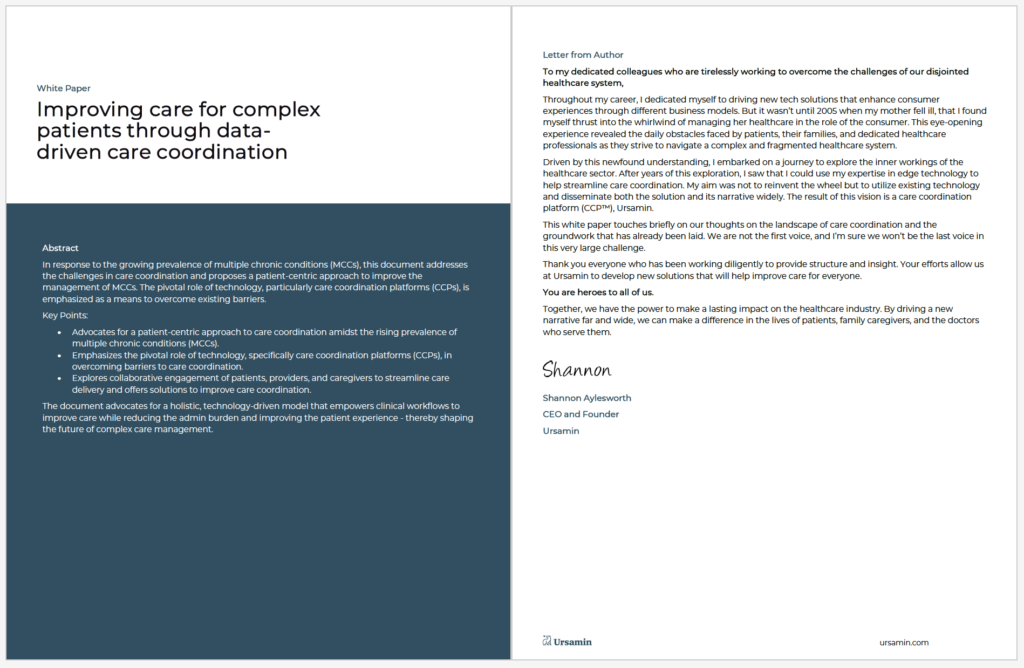
[Whitepaper] Improving Care for Complex Patients Through Data-Driven Care Coordination
In response to the growing prevalence of multiple chronic conditions (MCCs), this document addresses the challenges in care coordination and proposes a patient-centric approach to improve the
management of MCCs.

Case Study: Unburdening Caregivers in the Healthcare Maze
Lori juggles multiple medical portals and grapples with an overload of information. This struggle impacts her ability to navigate the healthcare maze while trying to ensure her family receives optimal care. Read how she overcomes this burden and managers her burnout.

AHRQ’s eCare Plan Study Reveals Key Lessons in Care Coordination
Effective care coordination requires a multidisciplinary approach. Meaning, it needs to involve healthcare professionals from various specialties working together to develop a comprehensive care plan that addresses the patient’s physical, mental, and social needs.